
UPCOMING WEBINAR

Are FXI(a) inhibitors the anticoagulants of the future? If so, what impact would they have on coagulation tests?

Join us for this upcoming session

November 19, 2026 at 3:00 PM UTC+2

Starts in:
29
Days
14
Hours
32
Min
29
Sec
Hemostasis November 19, 2026 at 3:00 PM UTC+2 1 hr
Speakers
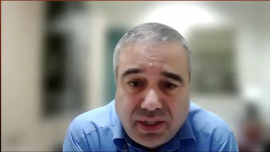
Georges Jourdi
Professor in Hematology Paris Cité University Clinical pathologist at Lariboisière University Hospital, AP-HP

About This Webinar

Short biography

Georges Jourdi is a professor in hematology at Paris Cité university, clinical pathologist at Lariboisière university hospital (AP-HP), and a mid-career investigator at INSERM 1144.

Beyond his research and clinical work, he is deeply engaged in the scientific community. He serves as chair of the International Society on Thrombosis and Haemostasis (ISTH) subcommittee on “Platelets in Health and Disease” and as coordinator of the working group on Thrombosis and Antithrombotic drugs (TITANs) of the French Society on Thrombosis and Haemostasis (SFTH).

He has a long-standing interest and experience in preclinical and clinical studies in haemostasis, thrombosis, antithrombotic drugs PK/PD studies, and beyond. His career has been interdisciplinary, shaped by training and professional experience in France, and abroad, and by sustained national and international collaborations.

Resume

Factor XI and its activated form (FXI(a)) have emerged as promising anticoagulant targets because they contribute to thrombosis while playing a limited role in normal hemostasis. This concept is supported by the relatively mild bleeding tendency observed in individuals with congenital FXI deficiency. It is then hypothesized that FXI(a) inhibition may reduce thrombotic events while preserving hemostatic function and limiting bleeding complications. Three leading agents are currently under investigation: abelacimab, a monoclonal antibody targeting FXI/FXIa, and the oral small-molecule inhibitors asundexian and milvexian. Ongoing and completed phase 3 trials provide an initial picture of their safety and efficacy across multiple thrombotic indications.


Although routine laboratory monitoring is not required with FXI(a) inhibitors, assessment of anticoagulant activity may be useful in emergency situations such as major bleeding or urgent invasive procedure. FXI(a) inhibitors may also interfere with routine and specialized coagulation assays. Understanding these effects will be essential to ensure accurate interpretation of coagulation results in patients receiving FXI(a)-targeted therapies.


This webinar will offer clinicians, clinical pathologists, researchers, and laboratory professionals an opportunity to deepen their knowledge on FXI(a) inhibitors, their potential to reshape the future of anticoagulation, and their potential impact on routine and specialized coagulation testing.